


What is MSME Registration?
MSME Registration, also known as Udyam Registration, is an official recognition granted by the Government of India to micro, small, and medium-sized firms (MSMEs). It assists firms in establishing their legal identity and being eligible for a wide range of government advantages.
MSME registration categorizes firms based on their investment in plant and machinery and yearly turnover, as defined by the Ministry of Micro, Small, and Medium firms.
Businesses who register under this system receive an MSME Registration Certificate, which serves as confirmation of their status and trustworthiness in the eyes of financial institutions, customers, and the government.
Why the Government Offers Schemes and Incentives for MSME Registration
The MSME sector is critical to India's economic growth, accounting for roughly 30% of GDP and employing more than 110 million people nationwide. Recognizing this influence, the Indian government actively promotes MSMEs with a variety of initiatives, subsidies, and incentives.
These efforts aim to:
- Encourage entrepreneurship and self-employment among small business owners.
- Promote innovation and technological acceptance in traditional sectors.
- Increase access to financing by providing collateral-free loans and reduced interest rates.
- Increase worldwide competitiveness by offering marketing and export help.
- Increase jobs and promote balanced regional growth.
In brief, government support assists small enterprises in overcoming financial and operational problems, assuring long-term growth in a competitive market.
Importance of MSME Registration to Avail These Benefits
While there are several incentives and schemes available for small businesses, only registered MSMEs have official access to them. MSME registration provides various benefits, including:
- Loans, subsidies, and tax breaks are now more easily accessible.
- Eligibility to apply for government bids and contracts designated for MSMEs.
- The MSME Delayed Payments Act protects businesses by requiring buyers to make timely payments.
- Financial support for technological advancements, quality certification, and exports.
Furthermore, registered MSMEs are granted preference in public procurement and receive special treatment under a variety of state-level laws.
Thus, gaining MSME Registration is more than just a legal need; it is a strategic move toward long-term growth, financial stability, and corporate legitimacy.
Financial Support & Credit Schemes
Financial help is one of the most important types of support provided to MSMEs. Access to affordable credit enables small enterprises to establish, sustain, and develop their operations successfully. To make funding easier, the government has implemented a number of initiatives that offer collateral-free loans, subsidies, and low-interest financial aid to registered MSMEs.
Let's take a closer look at a few key schemes:
The Ministry of MSME and the Small Industries Development Bank of India (SIDBI) jointly created the CGTMSE Scheme to assist micro and small firms with collateral-free loans.
Key Benefits:
- MSMEs can borrow up to ₹2 crore without requiring collateral or a third party guarantee.
- The government provides a guarantee covering up to 75-85% of the loan amount, reducing risk for lending institutions.
- Both new and current MSMEs involved in manufacturing or service activities are eligible.
This program allows entrepreneurs who do not have enough assets for standard loans to confidently establish or expand their firms.
2. Prime Minister’s Employment Generation Programme (PMEGP)
e Khadi and Village Industries Commission (KVIC) runs the PMEGP, a major credit-linked subsidy program under the Ministry of MSME. It seeks to provide self-employment opportunities by assisting the formation of new micro-enterprises in both rural and urban locations.
Key Benefits:
- The government gives a subsidy ranging from 15% to 35% of the overall project cost, based on the applicant's area and category.
- The remaining amount can be borrowed from banks as term loans.
- Individuals over the age of 18 with at least a 10th pass qualification, as well as registered MSMEs and self-help groups, are eligible for assistance.
This initiative is especially advantageous to first-time entrepreneurs wishing to launch small-scale businesses.

3. MUDRA Loan Scheme (Pradhan Mantri MUDRA Yojana)
entrepreneurs and company owners in three categories:
- Shishu offers loans up to ₹50,000 for new enterprises.
- Kishor offers loans ranging from ₹50,001 to ₹5 lakh for expanding businesses.
- Tarun offers loans ranging from ₹5 lakh to ₹10 lakh for established firms.
Key Benefits:
- No collateral is required for loans up to ₹10 lakh.
- Flexible repayment choices at reasonable interest rates.
- Available from a variety of financial institutions, including public and commercial banks, MFIs, and NBFCs.
This program supports micro-entrepreneurs, particularly in retail, small manufacturing, services, and trading.
The Stand-Up India Scheme encourages inclusive entrepreneurship by offering loans to women and SC/ST entrepreneurs to launch new businesses..
Key Benefits:
- Loans from ₹10 lakh to ₹1 crore are available for starting greenfield businesses.
- At least one woman and one SC/ST entrepreneur per bank branch can benefit from the plan.
- This includes both manufacturing and service-based firms.
- Provides working capital assistance, training, and guidance for business startup.
This effort enables underrepresented groups to achieve financial freedom and become self-sufficient businesses.
Market and Export Support
One of the most difficult obstacles that small firms face is expanding into new markets, both local and foreign. The Government of India supports many schemes to help MSMEs expand their market reach and compete globally, including financial assistance, marketing exposure, and export promotion support.
Let's look at the important initiatives:
International Cooperation (IC) Scheme under MSME Registration
The International Cooperation Scheme intends to boost Indian MSMEs' worldwide competitiveness by facilitating their participation in international trade fairs, exhibitions, and buyer-seller meetings abroad.
Key Benefits:
- Financial help for travel, stall rentals, and product displays at international expos.
- Eligible MSMEs will receive up to 80% reimbursement for their participation costs.
- Opportunities to network with global buyers, investors, and distributors.
- Support for hosting international conferences and technology exchange programs in India.
Participating in such events allows MSMEs to increase their export potential, acquire new clientele, and explore international relationships.

Procurement Policy for MSMEs
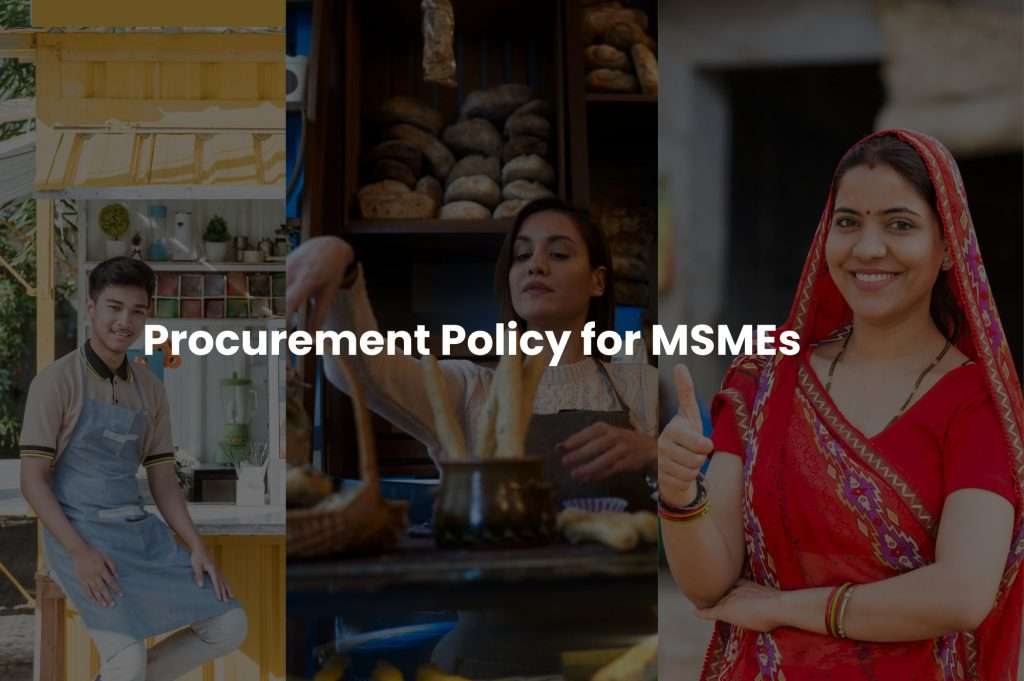
Under the Public Procurement Policy, the Government of India requires all Central Ministries, Departments, and Public Sector Undertakings (PSUs) to source at least 25% of their total yearly purchases from registered MSMEs.
Key highlights:
- Out of this 25%, 4% is set up for SC/ST entrepreneurs and 3% for female entrepreneurs.
- MSMEs are given preference during the tendering process, with earnest money deposits and turnover requirements being relaxed.
- Encourages fair competition and consistent commercial opportunities for small businesses.
This initiative ensures MSMEs have guaranteed market access, which boosts revenue and business sustainability.
MSME Export Promotion Schemes under MSME Registration
The government has also established specific export promotion initiatives to assist MSMEs in entering and expanding into global markets.
Key features:
- Market Development Assistance (MDA) provides financial assistance for worldwide marketing, participation in international exhibits, and buyer-seller meetings.
- Export Credit Guarantee Corporation (ECGC) provides insurance and credit protection to exporters.
- Training and workshops to improve knowledge of export documents, quality standards, and logistics.
These programs aim to help Indian MSMEs become globally competitive companies by allowing them to display "Make in India" products on worldwide venues.

Technology & Innovation Support under MSME Registration
To be competitive and sustainable, MSMEs must constantly improve their technology and embrace innovation. Recognizing this need, the Ministry of MSME offers a variety of programs that encourage product design, innovation, and digital transformation.
Design Clinic Scheme under MSME Registration
The Design Clinic Scheme provides MSMEs with expert advise and financial aid to improve their product design, usability, and general market appeal.
Key Benefits:
- Financial assistance of up to ₹15 lakh per project for design enhancements or product innovation.
- Expert advice from design professionals and institutions.
- Promotes innovation in packaging, product attractiveness, and functionality.
- Helps MSMEs increase brand value and customer satisfaction.
This program assists small enterprises to develop market-ready and competitive products, increasing both domestic and export opportunities.
Incubation Scheme under MSME Registration
The Incubation Scheme for MSMEs promotes the development of innovative company concepts and new technologies by providing support from government-approved company Incubators (BIs).
Key Benefits:
- Financial support of up to ₹15 lakh per idea for prototype development.
- Support for the commercialization of new items.
- Access to mentoring, workspace, and testing facilities.
- Encourages entrepreneurs, students, and inventors to turn their ideas into successful enterprises.
This project helps to bridge the gap between idea and implementation, encouraging an innovative and entrepreneurial culture in India.
Digital MSME Scheme
The Digital MSME Scheme aims to increase digitization and technology adoption among small businesses. It enables them to incorporate IT technologies into manufacturing, marketing, and operations, hence increasing efficiency.
Key Benefits:
- Financial help for implementing cloud-based solutions including ERP, accounting, and CRM systems.
- Awareness campaigns and workshops on digital technologies and cybersecurity.
- Encourages MSMEs to adopt Industry 4.0 practices, increasing productivity and competitiveness.
This initiative enables MSMEs to use digital platforms to optimize their business processes, cut expenses, and improve customer engagement.
State-Level MSME Incentives
While the central government provides many initiatives to enhance the MSME sector, individual states also conduct incentive programs to encourage entrepreneurship and local employment. These state-level programs are intended to meet regional industrial demands while also providing additional financial, infrastructure, and policy support to registered MSMEs.
Here's a brief outline of how a few significant states help MSMEs:
Gujarat

Gujarat's Industrial Policy provides lucrative incentives for MSMEs, including:
- New units can qualify for capital investment subsidies of up to 25%.
- Interest subsidy on term loans for manufacturing businesses.
- Compensation for quality certifications, patent registration, and technology acquisition.
- Access to fully developed industrial parks with plug-and-play infrastructure.
Maharashtra

Maharashtra's Package Scheme of Incentives (PSI) helps MSMEs through:
- Stamp and electricity duty exemptions.
- Interest and power tariff subsidies.
- SGST reimbursement to qualifying manufacturing entities.
- Special incentives for female entrepreneurs and units established in underserved areas.
Karnataka

Karnataka's MSME Policy 2020-2025 aims to promote innovation and sustainable growth by providing:
- Capital subsidies for new businesses.
- Technology adoption allows for digital transformation.
- Interest subsidies on loans obtained from state-recognized banks.
- Export-oriented MSMEs and SC/ST enterprises receive exclusive support.
How to Avail These Benefits
To take advantage of central and state MSME schemes, make sure your company is officially registered with Udyam (the government's MSME registration system).
Here is how to start:
Step 1: Obtain Udyam Registration.
- Go to the official Udyam Registration Portal (https://udyamregistration.gov.in).
- Fill in your Aadhaar number, business details, investment, and turnover figures.
- The system automatically checks data against the PAN and GST databases.
- Once filed, you will be given an Udyam Registration Certificate with a unique identification number.
This certificate is the key document used to apply for MSME schemes and obtain benefits.
Step 2: Apply for Schemes online.
- Visit the relevant scheme or government portal (e.g., CGTMSE, PMEGP, MUDRA).
- Log in or register using your Udyam number and business information.
- Complete the application form and upload the relevant documents.
- Submit the form and monitor your application's status via the site.
Most initiatives are linked to government systems like as MyMSME, Champions Portal, or individual state MSME agencies, making it easier to acquire and track benefits.
Documents Required
- Although requirements may vary across schemes, you'll typically need the following:
- Udyam Registration Certificate
- PAN & GSTIN
- Business address evidence
- A project report or business plan (for financial schemes)
- Bank account information and a cancelled cheque.
- ID evidence for the proprietor or directors
- Quotation for machinery or raw materials (if applicable)
Eligibility criteria
To qualify for the MSME benefits:
- According to MSME criteria, your business must be micro, small, or medium-sized.
- You should be involved in manufacturing, production, or service operations.
- Businesses must have a valid Udyam certificate and meet scheme-specific criteria such as turnover limitations or industry focus.
Once registered, you can apply for various programs at the same time, depending on the needs of your firm, such as financial, export, or innovation support.
Conclusion
The MSME Registration is more than simply a certificate; it provides access to a variety of government-backed benefits that can impact the future of small and expanding firms. These programs enable businesses to develop, expand, and compete globally by providing financial help and market exposure, as well as digital transformation and export support.
Businesses can improve their financial stability, upgrade their operations, and create long-term growth prospects by taking advantage of both central and state-level MSME incentives.
So, if you haven't already registered your business, now is the moment.
Register your company with FilingPro and begin claiming your MSME perks now!
Click here to check all details: MSME Registration
Get acknowledged, advance faster, and lay a stronger basis for your success.
Check out our other related Blogs : Click Here