



Introduction
In today's fast-changing business landscape, entrepreneurs prioritize flexibility and cost. Many startups, freelancers, and small enterprises no longer see the need to invest in real office space, particularly in the early stages. Instead, many are turning to virtual offices — a modern, cost-effective alternative that provides all the professional benefits of a traditional office without the administrative costs. It has also become one of the most convenient ways to register a company in India while maintaining a professional business presence.
A virtual office gives a recognizable business address that can be used for company formation, GST registration, and official correspondence. It allows businesses to build a presence in a premium company location, even if they work remotely from home or another city.
With India's startup environment thriving, thousands of new enterprises are selecting virtual offices to streamline the registration procedure. This not only saves money, but also assures that the official business address meets the Ministry of Corporate Affairs (MCA) regulations.
In this article, we'll look at what a virtual office is, how it varies from coworking or real office spaces, and how to use one to effortlessly register your company in India.
What is a Virtual Office?
A virtual office is a service that enables businesses to utilize a professional business address without having to rent or maintain a real space. It bridges the gap between standard office setups and remote working by providing all of the necessary office-related services without the cost of infrastructure.
Key Features of a Virtual Office:
- A recognized business address in a commercial location suitable for MCA and GST registration.
- Mail handling and forwarding services for receiving business communications.
- Dedicated phone numbers or call answering services (available with some plans).
- On-demand access to meeting rooms and shared workplaces.
- Assist with legal papers, such as No Objection Certificates (NOC) and rental agreements.
These capabilities make virtual offices ideal for startups, solopreneurs, and businesses looking to expand into numerous cities without establishing full-scale offices.
Virtual Office vs Coworking Space vs Physical Office
| Type | Description | Ideal For | Cost |
|---|---|---|---|
| Virtual Office | Provides a business address and basic services without physical space. | Remote teams, freelancers, and startups. | Very low |
| Coworking Space | Shared workspace with desks, internet, and networking opportunities. | Freelancers, small teams, and entrepreneurs who need a physical place to work. | Moderate |
| Physical Office | A dedicated office setup owned or rented by a business. | Medium to large companies requiring in-person teams. | High |
In simple terms, a virtual office gives your business a legal and professional identity, while still letting you work from anywhere.
Common Facilities Offered by Virtual Offices in India:
- Professional business address (company and GST registration).
- Mail and courier management.
- Documentation required: rent agreement, NOC, and utility bill.
- Optional add-ons include call answering, conference room access, and administrative help.
A virtual office is an excellent starting point for anyone wishing to launch a business in India without making significant investments in real land or infrastructure.
Why Use a Virtual Office for Company Registration?
Setting up a business has typically required renting or owning office space, which can quickly deplete finances for startups and small businesses. A virtual office is a more cost-effective solution that provides all of the necessary components of a corporate presence.
The following are the primary reasons why entrepreneurs nowadays decide to register their firm with a virtual office in India:
Cost-Effective Business Setup
Renting or leasing a business office space frequently requires large upfront deposits, furniture, maintenance fees, and monthly rent. This might be costly for a freshly registered firm.
A virtual office reduces these costs while yet providing you with a valid business location recognized by government authorities.
You simply pay for the address and accompanying services, allowing you to dramatically reduce infrastructure expenditures and devote cash to business growth, marketing, or product development.

Professional Address in a Prime Location
A virtual office enables your company to have a registered address in a desirable city, such as Bengaluru, Mumbai, Delhi, or Hyderabad, without really functioning there.
Having a great company address increases your brand's reputation and helps you acquire the trust of clients, partners, and investors. It gives your company a professional image, which is very useful for remote companies looking to establish themselves in the market.

Flexibility for Remote and Hybrid Teams
In today's remote work culture, teams are frequently dispersed over numerous locations or even nations.
With a virtual office, your company can legally exist at one location while operating from anywhere.
This flexibility enables you to easily manage your business operations, have virtual meetings, and communicate online without being confined to a physical office space.
Many virtual office providers also provide on-demand conference rooms or coworking spaces as needed, giving you the best of both worlds.

Easy Compliance with MCA and GST Requirements
One of the primary reasons organizations use virtual offices is to meet all regulatory compliance requirements.
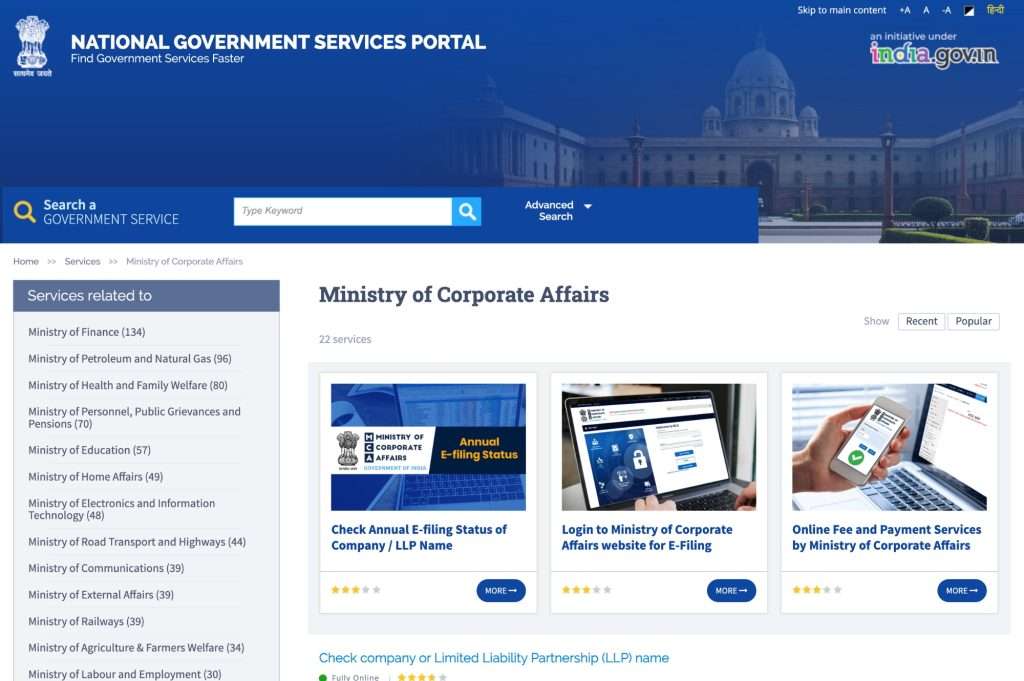
For company registration under the Ministry of Corporate Affairs (MCA), you must have a valid business address for official communication.
A verified virtual office address, coupled with documentation such as a rent agreement, NOC from the property owner, and a utility bill, is perfectly appropriate.
Similarly, for GST registration, a virtual office can serve as your primary location of business.
As long as the documentation is correct, registering your company with a virtual office is entirely legal and compliant.
Ideal for Startups, Freelancers, and Small Businesses
A virtual office is the ideal choice for:
Startups seeking to develop a professional presence without a significant investment.
Freelancers who want to officially establish their firm so they can issue invoices and qualify for government perks.
Small enterprises expanding into numerous states but not yet ready to create physical locations.
It's a scalable, hassle-free structure that helps your business expand at every stage, from incorporation to expansion.

Is It Legal to Register a Company with a Virtual Office in India?
Yes, forming a corporation with a virtual office in India is entirely legal, as long as all required documentation and agreements are in place. The Ministry of Corporate Affairs (MCA) accepts virtual office addresses as genuine business addresses for company registration and official correspondence, as long as they meet specific compliance standards.
A virtual office is simply your registered office address, where all government communication, notices, and paperwork are formally transmitted. It can also serve as your contact or correspondence address with clients, suppliers, and legal entities.
According to MCA guidelines:
- Every company incorporated in India must have a registered office address that can receive official communications and notices.
- This address must be verifiable, and the organization should be able to provide supporting documentation upon request.
- A virtual office address is permitted as long as it includes necessary documentation such as a leasing agreement, a NOC from the property owner, and a current utility bill for proof.
Thus, firms can legally register their company at a virtual office address as long as the service provider provides the necessary legal documents and agreements.

Virtual office addresses are often accepted for:
- Company Registration (MCA) — serves as your registered or communications office.
- GST Registration - as your primary location of business, if approved by the provider.
- Business correspondence refers to receiving mail, couriers, and government documents.
However, it is crucial to emphasize that the virtual office must be commercially registered rather than home. Always make sure your provider is MCA-compliant and issues documents that are recognized by government authorities.

Although virtual offices are legal, compliance is primarily reliant on correct documentation.
Incomplete or faulty documentation may result in MCA rejection during incorporation or GST registration delays.
So, always verify:
- The virtual office agreement clearly states your company's name.
- The address is real, as evidenced by a legal rent agreement and the owner's assent.
- All documents are current, preferably from the last two months.
By adhering to these guidelines, you can confidently register your firm at a virtual office location without any legal ramifications.

Documents Required for Company Registration with a Virtual Office
Registering your company with a virtual office requires documents from both parties: the firm's directors and the virtual office supplier. Having all documentation ready promotes a smooth process and prompt approval from MCA.
A. Documents from the Company/Directors
Director's Identity Proof: PAN card (required for Indian nationals) or passport (for foreign nationals).
Address Proof: Aadhaar card, voter ID, driver's license, or passport.
Passport-sized photographs that are clear and recent.
The Digital Signature Certificate (DSC) is required for filing incorporation forms online.
Director Identification Number (DIN) - Can be obtained concurrently with incorporation via the SPICe+ form.
Business Name Options - Provide 2-3 suggested names for approval through MCA's name reservation system.
B. Documents from the Virtual Office Provider
Rent Agreement or Lease Deed - A formal agreement between the virtual office provider and your organization governing the usage of the premises for registration purposes.
The No Objection Certificate (NOC) is issued by the property owner and confirms that the premises can be utilized as a registered office for your company.
Utility Bill - A recent energy, water, or property tax bill (no older than two months) that serves as address evidence.
Virtual Office Agreement - A service contract that specifies the services provided, such as mail handling, forwarding, and business address usage.
Optional Supporting Documents (If Applicable)
- GST Registration Application (if applying for GST at the same address).
- Authorization Letter (if a professional firm is filing on your behalf).
Step-by-Step Process to Register a Company with a Virtual Office
Registering a corporation with a virtual office is a simple process if you follow the steps correctly and have all of your documentation in order. The Ministry of Corporate Affairs (MCA) allows the use of a virtual office address for registration, as long as it meets compliance standards.
Here's a step-by-step tutorial that will help you finish the process efficiently:
Step 1: Choose Your Company Type
The first stage is to define the structure of your company. The most popular sorts of businesses you can register in India are:
- Private Limited Company - Ideal for new and expanding businesses.
- Limited Liability Partnership (LLP) - Ideal for professionals and businesses desiring limited liability.
- One Person Company (OPC) - Designed for sole proprietors who want to operate a registered firm.
- Partnership Firm or Sole Proprietorship - Simpler arrangements, however they provide little legal protection.
Choosing the correct company type is determined by your business objectives, finance requirements, and the level of compliance you are willing to manage.

Step 2: Get a Virtual Office Address in Your Preferred City/State
Choose a virtual office supplier that offers MCA-compliant documentation.
Choose a location or state where you want to register your firm, such as Mumbai, Delhi, Bengaluru, or Hyderabad. This will be the registered office address for MCA communications.
Ensure that your provider provides:
- A valid rental agreement or lease document.
- NOC from the property's owner.
- To verify your address, bring a recent utility statement.
This address will appear on your company's incorporation papers and formal government correspondence.

Step 3: Collect the Required Documents from the Provider
After choosing your virtual office, request the entire collection of documents needed for registration, including:
- Rental agreement or lease deed.
- NOC from the Property Owner.
- Utility bill (no older than two months).
- Virtual Office Agreement (where applicable).
These documents will be used as evidence of address when you file your MCA.

Step 4: Apply for DSC and DIN
Next, apply for the following:
- The Digital Signature Certificate (DSC) is required for signing online forms and documents submitted to MCA.
- The Director Identification Number (DIN) is a unique identification number for business directors.
Both DSC and DIN may be applied for online, and several service providers, such as FilingPro, will help you get them swiftly.

Step 5: Reserve Your Company Name on MCA
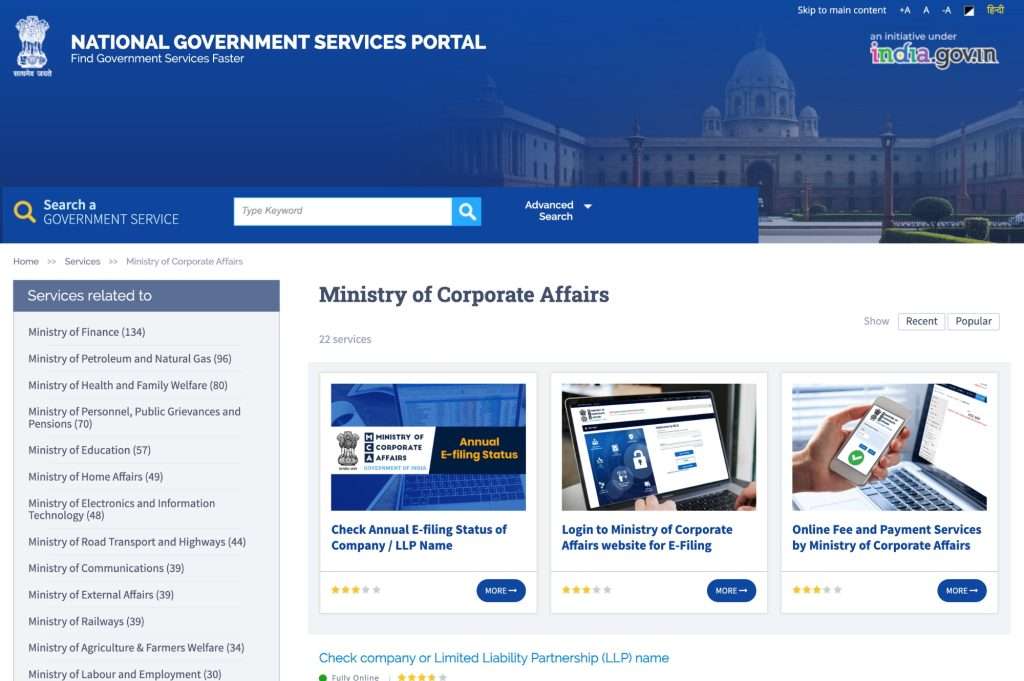
To apply for name approval, go to the MCA portal and fill out the SPICe+ Part A form or the RUN (Reserve Unique Name).
Choose a name like:
- Is unique and not already registered.
- Complies with the MCA's name requirements.
- It reflects your commercial nature.
Once authorized, the name is valid for 20 days (for new firms) to proceed with registration.
Step 6: File SPICe+ Form with MCA Including the Virtual Office Address
The SPICe+ (Simplified Proforma for Incorporating business Electronically Plus) form is MCA's integrated business registration form.
Complete all details carefully, including your virtual office address as the registered office. Attach the necessary documentation, such as:
- Proof of directors' identities and addresses.
- Proof of virtual office address (rent agreement, no-obligation certificate, utility bill).
- Declaration and consent forms (INC-9 and DIR-2).
Submit the form online using your DSC. Once accepted, the MCA will issue you a Certificate of Incorporation (COI).

Step 7: Receive Certificate of Incorporation (COI)
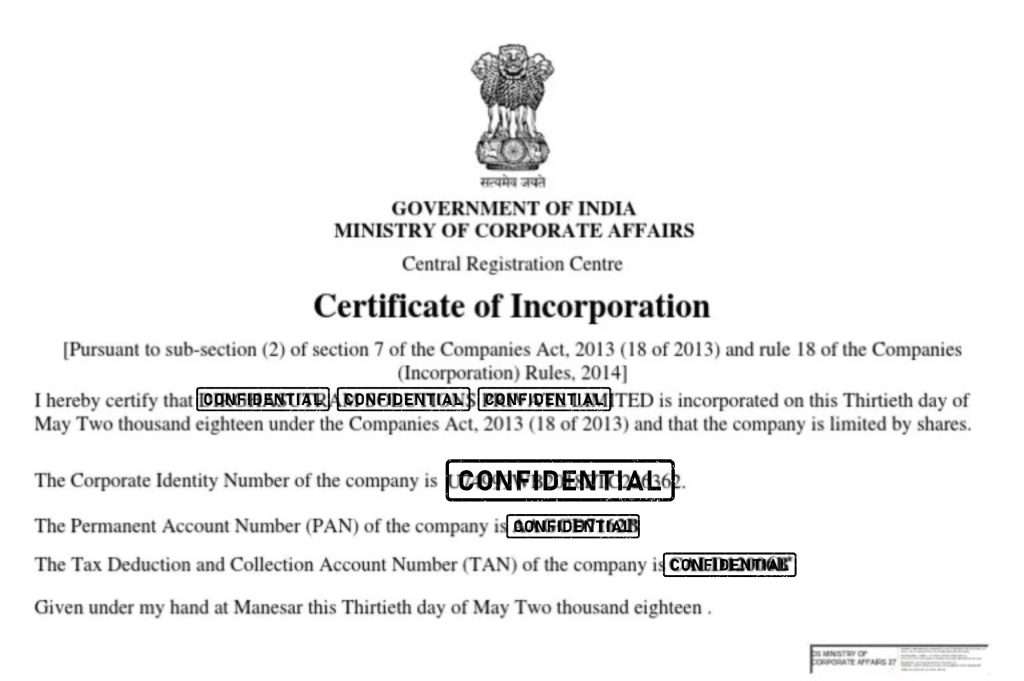
After verification, the MCA will provide the Certificate of Incorporation, which confirms your company's legal existence.
This document contains:
- Company name.
- Corporate Identification Number (CIN).
- Date of incorporation.
- Registered Office Address.
With this, your firm is officially registered in India, with a virtual office location.
Step 8: Apply for PAN, TAN, and Open a Bank Account
When your company is incorporated, the Income Tax Department will automatically issue you a PAN and TAN (Tax Account Number).
The next step is to open a current bank account in your company's name by providing the Certificate of Incorporation, PAN, and address proof.

Compliance and Post-Registration Requirements
Registering your firm is merely the beginning; maintaining compliance is just as vital. Once your company has been registered through a virtual office, you must complete a few post-registration processes to ensure compliance with Indian business rules.
- Update the address for GST registration (if applicable).
If your firm qualifies for GST registration, use the same virtual office address as your main location.
When applying for GST through the GST portal, include your rent agreement, NOC, and utility bill.
Once confirmed, this address will be linked to all of your invoices and tax returns.
2. Maintain proper documentation for inspection and verification.
Keep copies of any address-related documents securely stored, both digitally and physically.
Authorities can check or request verification during audits or correspondence.
Ensure that the rent agreement and utility bill are always up to date and legitimate; these are normally renewed every 11 months or according to the requirements of your virtual office provider.
3. Renew the Virtual Office Agreement Annually (If Required).
Most virtual office companies provide one-year or multi-year agreements.
Renew the contract on time to keep your company's registered address active. Failure to do so may result in communication breakdowns or compliance difficulties with MCA or GST authorities.
- Meet annual MCA compliance requirements.
Even if you work from a virtual office, you must still adhere to MCA laws, such as:
- Filling up annual returns and financial statements.
- Conducting board meetings (either virtually or physically).
- Keeping proper books of accounts.
FilingPro and other platforms help organizations manage compliance responsibilities efficiently, allowing them to focus on growth while being legally compliant.
In conclusion, registering your company with a virtual office is a clever, flexible, and completely legal approach to create a commercial presence in India.
It lowers expenses, streamlines compliance, and enables entrepreneurs to scale faster - all without the hassle of maintaining a physical office.
Things to Consider When Choosing a Virtual Office Provider
Choosing the correct virtual office provider is a critical step in the registration process. The quality, dependability, and documentation support provided by your provider might impact whether your MCA or GST application is granted smoothly or with delays.
Here are the essential considerations to consider before finalizing a virtual office.
- MCA-compliant documentation.
Ensure that the provider provides all of the legal paperwork needed for company registration, including:
- Rental agreement or lease deed.
- NOC from the Property Owner.
- Utility bill (electricity or property tax, no more than two months old).
These documents should clearly show the office address and be in the same name as the property owner listed in the NOC.
2. Location and Accessibility.
Choose a supplier in a well-known city's commercial district, such as Bengaluru, Mumbai, Delhi, Hyderabad, or Pune.
A professional business location in a reputable region not only improves your brand image, but it also fosters trust among clients and investors.
Some businesses may want to have virtual offices in different states to increase their presence more affordably.
3. Services Offered Different companies offer varying levels of service.
Aside from the business address, consider possibilities such as:
- Mail and courier handling.
- Document forwarding.
- Dedicated phone line or receptionist service.
When necessary, you can use coworking or meeting spaces. A service that offers these add-ons ensures that your virtual office runs smoothly, just like a genuine firm.
- Reputation and reliability
Always read reviews, ratings, and testimonials before selecting a supplier.
Choose a reputable and competent service who has a track record of helping clients with company registrations and GST approvals.
Reputable service providers, such as FilingPro, ensure full paperwork, transparent pricing, and seamless collaboration with government processes.
- Renewal and Support Terms
Before signing up, establish how long your agreement will be valid and what the renewal terms are.
Also, check that the provider provides continuing support for compliance, mail forwarding, and document renewal as needed.
Cost of Registering a Company with a Virtual Office
The cost of registering a company with a virtual office is determined by two factors: company formation fees and virtual office rental/service fees. Here's the breakdown:
- Virtual Office Charges
Virtual office plans in India are often reasonably priced and adaptable, depending on the city and service provider.
- Basic plan (for business address only): ₹1,000-₹3,000 per month.
- Standard plan (address + mail handling) costs ₹3,000 - ₹5,000 per month.
- Premium package (including conference room access and call handling) costs ₹5,000 - ₹8,000 per month.
Many suppliers also offer more affordable annual packages, which are great for new enterprises.
- Company registration fees.
In addition to the virtual office expense, you'll have to pay for government and professional fees associated with incorporation.
- Government fees (MCA, PAN, TAN) range from ₹1,000 to ₹3,000, depending on the capital and state.
- Charges for professional or CA services range from ₹3,000 to ₹7,000 for comprehensive filing and paperwork.
Using a virtual office is a cost-effective and efficient option to start a business in India, often ranging from ₹6,000 to ₹15,000.
Conclusion
As India's business landscape changes, virtual offices have proven to be game changers for startups, freelancers, and entrepreneurs. They enable you to establish a legal business presence, meet MCA and GST regulations, and increase brand credibility without incurring the financial burden of renting a physical premises.
Registering your firm with a virtual office allows you to work from anywhere while maintaining a professional and compliant business setup.
Whether you're launching your first business, expanding into new states, or switching to a remote model, a virtual office provides the ideal foundation for confident and cost-effective growth.

Ready to register your company with a virtual office?
Get expert guidance, legal support, and seamless documentation with FilingPro — your trusted partner for company registration and compliance in India.
Transparent | Quick Process | Expert Support