


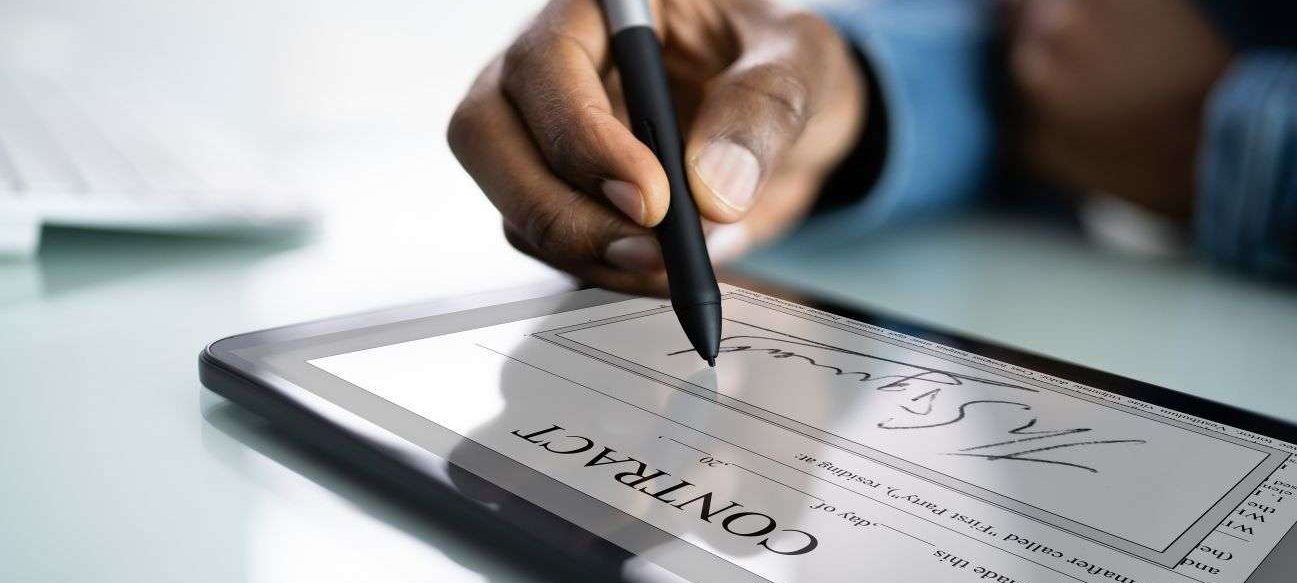
Introduction of Digital Signature
In today's digital-first world, establishing authenticity in electronic communications has become paramount. Just as wax seals and notarized signatures once served as the gold standard for document verification, we now have their technologically advanced counterpart—a cryptographic solution that has become the 21st-century standard for trust.
This modern authentication method represents far more than a simple electronic version of handwritten signatures. It provides:
- Unforgeable identity verification
- Tamper-evident document protection
- Globally recognized legal standing
From high-value business contracts to confidential healthcare records, this technology has become indispensable across all sectors. The transition from physical to digital trust mechanisms represents decades of cryptographic innovation and legal adaptation, creating a system where authenticity can be mathematically proven rather than visually inspected.
What is the "Modern Seal of Trust" Exactly?
The idea of a "seal of trust" has been around for centuries. Royalty used wax seals on royal proclamations, corporations used notary stamps on contracts, and governments used official seals on documents. These tangible forms of trust performed two key functions:
- Authentication - Verifying the identity of the document creator
- Integrity - Verifying that the document hadn't been tampered with
In the cyber age, electronic signatures meet these very same basic requirements—but with immensely better security and economy.
The Anatomy of a Digital Signature: A digital signature is more than a scanned image of a manual signature. It's a sophisticated cryptographic process that
- Binds the document to the signer's identity using digital certificates
- Generates a unique fingerprint of the document content with hashing algorithms
- Encrypts the fingerprint with the signer's private key
- Inserts timestamp information to determine the date the signature was applied
This is an approach that makes digital signatures much safer than their physical counterparts. While a wax seal might be melted and replaced, or a notary stamp faked, tampering with a properly executed digital signature is computationally unfeasible with current technology.
Why Digital Signatures Are the New Standard: Three critical factors establish digital signatures as the definitive seal of trust in our digital era
- Mathematical Assurance
Unlike traditional seals requiring visual verification, digital signatures provide cryptographic certainty through public-key infrastructure. The probability of forging a valid digital signature is comparable to randomly guessing a 256-bit encryption key—mathematically improbable with current computing power. - Automated Authentication
Physical seal authentication demands expert examination, while digital signature validation occurs instantly through standardized algorithms, enabling:
- Real-time verification in business workflows
- Automated compliance checks
- Seamless integration with document management platforms
- Global Interoperability
Digital signatures transcend borders—a properly executed digital signature in Germany holds equal validity in Japan or Brazil, supported by international frameworks including:
- The EU's eIDAS regulation
- U.S. ESIGN/UETA statutes
- UNCITRAL's Model Law provisions
This trifecta of cryptographic integrity, process efficiency, and universal recognition positions digital signatures as the undisputed standard for modern authentication. The technology's ability to provide irrefutable proof of identity and document integrity while streamlining operations explains its rapid adoption across industries and governments worldwide.
How Digital Signature Serve as the "Modern Seal of Trust"
1. Ensures Authenticity (Proof of Identity)
- Verifies the signer’s identity using a Digital Signature Certificate (DSC) issued by a licensed Certifying Authority (CA).
- Prevents impersonation, fraud, and tampering in documents.
- Example:
- FSSAI license applications require a Class 3 DSC to verify the business owner’s identity.
2. Guarantees Data Integrity (No Tampering)
- Uses cryptographic hashing to ensure the document remains unaltered after signing.
- Any modification after signing invalidates the signature, alerting the recipient.
- Example:
- E-tenders, contracts, and legal filings rely on DSCs to prevent forgery.
3. Provides Non-Repudiation (Legal Validity)
- The signer cannot deny signing the document later.
- Legally recognized under:
- Information Technology Act, 2000 (India)
- eIDAS Regulation (EU)
- UETA & ESIGN Act (USA)
- Example:
- Income Tax e-filing, MCA21 compliance, and GST returns mandate DSCs for accountability.
4. Streamlines Secure Digital Transactions
- Used in:
- E-governance (e.g., FSSAI, GST, MCA filings)
- Banking & Finance (e.g., loan agreements, digital KYC)
- E-commerce & Contracts (e.g., digital agreements, invoices)
- Replaces paper-based processes, reducing fraud and delays.
Benefits
| Benefit | Why It Matters |
|---|---|
| Security | Uses PKI encryption to prevent forgery |
| Speed | Sign documents instantly from anywhere |
| Cost Savings | Eliminates printing, scanning, and courier fees |
| Legal Compliance | Meets global e-signature laws |
| Audit Trail | Tracks who signed, when, and from where |
Digital Signature vs. Electronic Signature
| Feature | Digital Signature | Electronic Signature |
|---|---|---|
| Security | Encrypted, tamper-proof | May be a simple scanned signature |
| Authentication | Requires digital certificate | Basic verification (e.g., email) |
| Legal Weight | High (court-admissible) | Varies by jurisdiction |
| Use Case | Contracts, financial docs | Internal approvals, forms |
Documents that Require
- Legal Contracts (Leases, NDAs, Employment Agreements)
- Financial Documents (Loan Agreements, Tax Filings)
- Government Forms (Tenders, Licenses)
- Healthcare Records (E-prescriptions, Patient Consent)
- Software & Code (Authenticating updates)
Legal Recognition and Compliance Standards
Modern electronic authentication methods hold legal validity under several key international frameworks:
- eIDAS Regulation (EU) - Establishes a tiered trust framework (Basic, Intermediate, and Qualified levels)
- ESIGN Act (US) - Provides legal equivalence between electronic and traditional handwritten signatures
- IT Act (India) - Officially recognizes cryptographic authentication through the Aadhaar eSign system
For maximum legal protection, organizations should implement Qualified Electronic Signatures (QES), which mandate identity confirmation through accredited Certification Authorities. These standards ensure that electronically executed agreements carry the same legal weight as their paper-based counterparts while offering enhanced security features.
The Transformation of Trust Verification Methods
The progression from physical authentication to modern verification solutions reflects society's broader digital transformation:
Historical Development of Authentication Methods
| Period | Verification System | Key Constraints |
|---|---|---|
| Pre-Industrial | Wax Seals | Vulnerable to replication; needed physical handling |
| Industrial Era | Notarized Marks | Process-intensive; location-dependent |
| Digital Era | Cryptographic Verification | Immediate; universally accepted; mathematically protected |
This shift represented more than just technological advancement - it necessitated coordinated progress in three critical areas:
- Encryption Technologies (including RSA and ECC cryptographic systems)
- Regulatory Structures (electronic authentication legislation)
- Supporting Systems (the framework of Public Key Infrastructure)
In contemporary practice, advanced electronic authentication has moved beyond being merely an optional alternative to traditional methods. Its combination of enhanced security protocols and operational effectiveness has made it the solution of choice across vital sectors such as financial services, medical administration, and public sector operations. These industries now predominantly utilize cryptographic verification as their standard authentication protocol.
Digital Signature Certificate
A Digital Signature Certificate (DSC) is an electronic form of identification used to authenticate documents and transactions online. It ensures security, integrity, and non-repudiation in digital communications, making it legally valid under the Information Technology Act, 2000.
1. What is a Digital Signature Certificate (DSC)?
- A secure digital key issued by Certifying Authorities (CAs) to verify identity.
- Works like a physical signature but with higher security (encryption-based).
- Used for e-filing, online tenders, company registrations, GST, and income tax filings.
2. Types of Digital Signature Certificates
| Class | Usage | Security Level |
|---|---|---|
| Class 1 | Basic verification (Email, individual use) | Low |
| Class 2 | Business documents (ITR, MCA filings, GST) | Medium |
| Class 3 | High-security needs (E-tendering, online bidding) | High |
(Organizations mostly use Class 2 & 3 DSC for compliance.)
3. Where is DSC Required?
- Income Tax e-Filing (ITR, TDS returns)
- MCA Compliance (Company incorporation, annual filings)
- GST Portal (GSTR filings, e-way bills)
- E-Tendering (Government & private bids)
- Banking & E-Commerce (Online agreements, KYC)
4. How to Obtain a DSC?
Step 1: Choose a Certifying Authority (CA)
- eMudhra
- nCode Solutions
- Safescrypt (NSDL)
- CDAC
Step 2: Submit Documents
- Individuals: PAN, Aadhaar, Photo, Address Proof
- Companies: Incorporation Certificate, PAN, Director’s ID Proof
Step 3: Verification & Issuance
- In-Person Verification (IPV) or Aadhaar-based eKYC
- DSC is issued in a USB token or soft copy (PKCS#12 format).
Step 4: Install & Use
- Load DSC into emSigner/Java-based software for signing.
*(Processing Time: 1-3 days)*
5. Validity & Renewal
- Validity: 1 or 2 years (Renewable before expiry).
- Renewal Process: Similar to fresh application.
6. Legal Validity
- Recognized under IT Act, 2000 (Section 3).
- Equivalent to wet-ink signatures in court.
7. Benefits of DSC
- Secure & Tamper-Proof (Encrypted with PKI technology)
- Saves Time (No physical paperwork)
- Mandatory for Compliance (MCA, GST, Income Tax)
- Globally Accepted (For international e-transactions)
Digital Signature in Action: Three Case Studies
- Global Contracting: A multinational business can have officers in New York, London, and Tokyo sign the same agreement in minutes with digital signatures, saving weeks of courier slowdowns.
- Blockchain Transactions: All cryptocurrency transactions are actually digital signature operations, with wallets employing private keys to cryptographically sign transaction information.
- Government e-Services: From filings for taxes to business registrations, governments everywhere accept documents that bear qualified digital signatures, streamlining bureaucracy and enhancing security.
Types of Digital Signature
- Simple Digital Signature – Basic encryption (e.g., email signing)
- Advanced Digital Signature – Stronger authentication (used in contracts)
- Qualified Digital Signature (QDS) – Highest legal validity (requires CA verification)
Step-by-Step Process for Digital Signature
Step 1: Choose a Digital Signature Provider
- Options: DocuSign, Adobe Sign, eMudhra, DigiCert
- Obtain a Digital Certificate from a Certification Authority (CA).
Step 2: Upload the Document
- Drag & drop files (PDF, Word) into the signing platform.
Step 3: Apply Your Digital Signature
- The system generates a unique cryptographic hash.
- You sign it using your private key.
Step 4: Recipient Verification
- The recipient checks validity using your public key.
- If the hash matches, the signature is authentic.
Step 5: Secure Storage & Audit Log
- The signed document is stored with a timestamped audit trail.
Why is it Essential for the Modern Generation
- Remote Work – Sign from anywhere, anytime
- Eco-Friendly – No paper waste
- Fraud Prevention – No forgery or tampering
- Global Business – Cross-border legal compliance
Frequently Asked Questions
1. How does an electronic signature ensure document security?
Electronic signatures use encryption and unique digital certificates to verify the signer’s identity and prevent tampering, making them more secure than handwritten ones.
2. Are electronically signed documents legally binding?
Yes, in most countries, including the US (ESIGN Act), EU (eIDAS), and India (IT Act), properly executed e-signatures hold the same legal weight as wet signatures.
3. What’s the difference between a basic and a certified e-signature?
A basic version uses simple encryption, while a certified one requires identity verification by an authorized provider for higher security and legal compliance.
4. Can I use an e-signature for government filings?
Many government agencies accept them, especially for tax returns, business registrations, and license applications—check local regulations for specifics.
5. How do blockchain-based signatures work?
They use decentralized ledgers to record and verify transactions, adding an extra layer of security and transparency.
6. What industries benefit most from this technology?
Finance, healthcare, real estate, and legal sectors rely heavily on e-signatures for contracts, approvals, and compliance documentation.
7. Can someone forge an electronically signed document?
No—tampering breaks the cryptographic seal, immediately invalidating the signature and alerting all parties.
8. Do I need special software to sign electronically?
Yes, platforms like DocuSign, Adobe Sign, or government-approved tools (e.g., Aadhaar eSign) are required for valid authentication.
9. How long does it take to validate a signed file?
Verification happens instantly, with timestamps and audit trails providing real-time confirmation of authenticity.
10. Are e-signatures accepted across borders?
Yes, international laws like eIDAS and UNCITRAL ensure cross-border recognition, though some regions may require certified versions.