


Introduction to Environmental Social and Governance
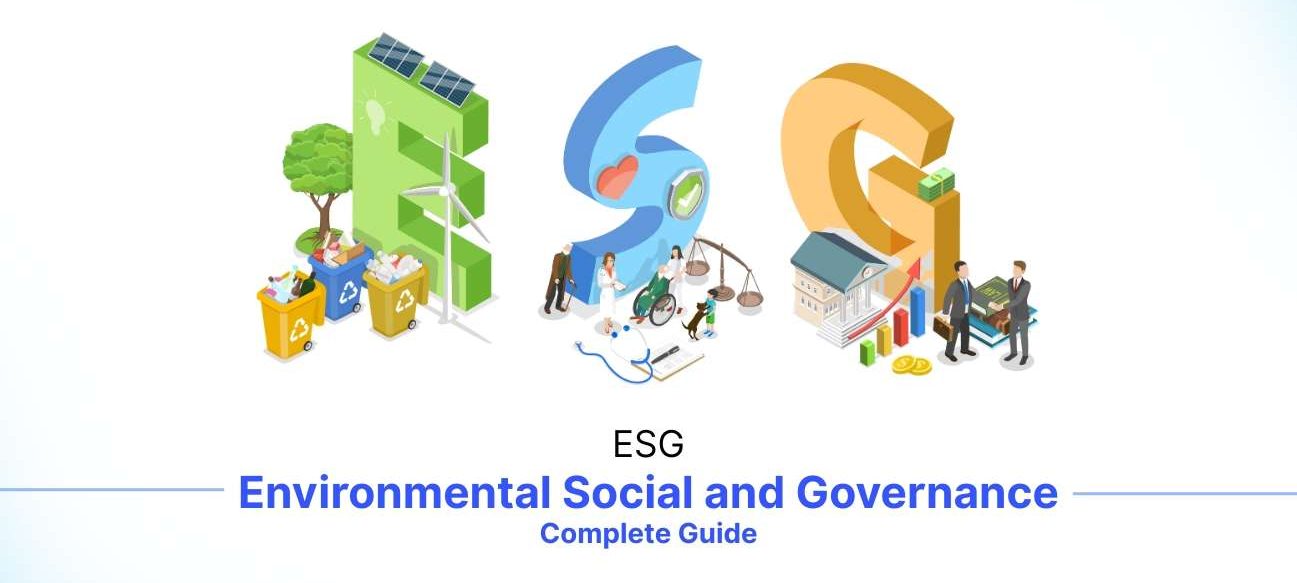
The acronym ESG stands for Environmental Social and Governance. It is a well recognized paradigm that assesses how a company or organization performs ethically in three key areas:
- Environmental: How a business affects nature, including carbon footprint, renewable energy use, trash management, and climate change action.
- Social: How a corporation manages its interactions with employees, customers, suppliers, and communities, with a focus on diversity, labor rights, and social responsibility.
- Governance refers to the ethical aspects of management, including transparency, compliance, board responsibility, and leadership structure.
Environmental Social and Governance principles work together to lay the groundwork for long-term, ethical corporate operations.
The concept of Environmental Social and Governance (ESG) refers to a change from profit-driven thinking to responsible, long-term corporate practices. While old models focused solely on financial results, ESG offers a broader approach, taking into account enterprises' impact on the environment, society, and corporate ethics.
This approach emphasizes that long-term growth and resilience are determined not only by revenues, but also by how corporations protect the environment, uphold social values, and maintain strong governance systems.
History & Evolution of Environmental Social and Governance
Origin of ESG Practices
The concept of Environmental Social and Governance practices dates back to the 1960s, with Socially Responsible Investing (SRI). Investors began to avoid companies associated with destructive activities, such as tobacco, guns, and apartheid.
The term ESG was first used in 2004 by the UN's Who Cares Wins report, which demonstrated how incorporating Environmental Social and Governanceconsiderations into investment decisions may produce long-term value.
Global Adoption for Businesses and Investments
Since then, Environmental Social and Governance has become a global standard:
- Worldwide: Investors, rating agencies, and asset managers use ESG criteria to evaluate organizations globally. ESG-focused funds are generating billions of dollars in investment.
- In India: India's SEBI has mandated Business Responsibility and Sustainability Reporting (BRSR) for top-listed firms. ESG mutual funds are also becoming popular with Indian investors.
Today, Environmental Social and Governance (ESG) is more than a trend; it is a basic strategy for organizations seeking to remain competitive, attract investors, and achieve long-term sustainability.
Detailed Explanation of ESG Components
The notion of Environmental Social and Governance (ESG) is built on three interconnected pillars. Each pillar is critical to assessing a company's level of responsibility, ethics, and sustainability.
Environmental
The environmental part of ESG examines how a company interacts with the environment and controls its ecological footprint. It addresses the question, "Does the company help or harm the environment?"
Key features include:
- Carbon Footprint: The measurement and reduction of greenhouse gas emissions to address climate change.
- Renewable Energy: The transition from fossil fuels to solar, wind, and other renewable energy sources.
- Waste management includes efficient recycling, limiting plastic use, and minimizing industrial waste.
- Climate Impact: Policies and measures to reduce risks associated with global warming, deforestation, and water scarcity.
- A corporation with good environmental standards not only preserves the environment, but also lowers operating risks and ensures long-term viability.asses per year
Social
The Social component of ESG assesses how a firm treats people, both inside and internationally. It assesses justice, inclusion, and human effect.
- Key features include:
- Employee rights include fair salaries, safe working conditions, and equal opportunity.
- Diversity and Inclusion: Establishing a discrimination-free workplace that welcomes people of various genders, races, and cultures.
- Customer Relations: Ensuring transparency, product safety, and responsible marketing.
- Community Development: Helping local communities through CSR activities, education programs, and healthcare support.
- Strong social practices enable businesses to develop trust, recruit top people, and maintain positive customer relationships
Governance
The Governance pillar focuses on how a corporation is administered. It guarantees that firms adhere to ethical standards, follow the law, and make decisions in an open and transparent manner.
- Key features include: Board Structure:
- Boards are balanced and autonomous, with diverse experience.
- Ethics: No tolerance for corruption, bribery, or fraud. Compliance means adhering to government regulations, financial disclosures, and industry norms.
- Transparency entails open communication with investors, shareholders, and stakeholders.
- Strong governance promotes accountability, safeguards investor trust, and prevents mismanagement and crises.
Benefits of ESG
Adopting Environmental Social and Governance (ESG) principles provides numerous benefits for businesses, investors, and stakeholders. Businesses that integrate ESG into their core operations benefit from increased reputation and long-term growth.
- Brand Reputation and Trust
Modern consumers and clients seek to support businesses that perform properly. Strong Environmental Social and Governance standards improve a company's image by demonstrating that it values sustainability, employee well-being, and ethical governance.
- Companies with a good ESG reputation frequently achieve long-term client loyalty.
- A positive brand image is also beneficial in attracting top talent and instilling staff pride.
2. Better risk management.
Businesses confront numerous hazards, ranging from climate change and resource scarcity to labor disputes and regulatory penalties.
- The environmental side of ESG helps to mitigate risks such as pollution fines, rising energy costs, and supply chain interruptions.
- The social aspect reduces the likelihood of employee unhappiness, strikes, or reputational harm as a result of improper labor practices.
- The Governance aspect safeguards businesses from fraud, corruption, and legal infractions.
Thus, ESG protects against financial, operational, and reputational risks.
3. Attracting Investors and Funding
Investors today are aggressively looking for companies with strong Environmental Social and Governance frameworks.
- ESG-focused companies are regarded as more stable, resilient, and future-ready.
- Global ESG funds are quickly expanding, investing billions in sustainable enterprises.
- ESG mutual funds are also gaining traction in India, demonstrating investor confidence in companies that prioritize ESG.
This makes ESG more than just an ethical decision; it's also a strategic instrument for gaining access to money and global markets.
4. Long-term Business Sustainability
Unlike short-term profit-driven approaches, ESG ensures that businesses stay relevant, responsible, and resilient over time.
- Environmentally conscious measures ultimately cut operational expenses.
- Social responsibility fosters strong community links, which promote business continuity.
- Governance practices ensure accountability, preventing the organization from failing due to mismanagement.
Ultimately, ESG enables long-term corporate growth while positively impacting society and the environment.
Importance of ESG
Environmental Social and Governance (ESG) is important to a wide range of stakeholders, including businesses, investors, and society as a whole.
- For companies
- Reputation and Brand Value: Companies that prioritize ESG standards gain increased consumer trust and loyalty.
- Risk Management: Proactive ESG initiatives can assist decrease the risks associated with climate change, labor concerns, and regulatory penalties.
- Competitive Advantage: Businesses that implement ESG gain an advantage over those who continue to use antiquated, profit-only approaches.
- Access to Capital: Investors are more inclined to fund companies that follow sustainable and ethical standards.
2. For Investors.
- Lower Risk, Higher Returns: Companies that follow ESG principles are more stable and robust, resulting in long-term returns.
- Informed Decisions: ESG measures help investors select businesses that share their values and risk tolerance.
- Sustainable Portfolios: The increasing demand for ESG funds reflects the global trend toward responsible investing.
3. For Society and Environment
- Protecting nature by reducing emissions, adopting sustainable energy, and reducing waste will help combat climate change.
- Social Equity: ESG promotes better working conditions, diversity, and fairness.
- Transparent governance improves accountability and reduces corporate fraud.
In sum, Environmental Social and Governance policies benefit everyone—stronger businesses, safer investments, and a better world for current and future generations.
Challenges in ESG Implementation
While the benefits are obvious, many businesses encounter difficulties when implementing Environmental Social and Governance policies.
- Cost and Resource Allocation
Transitioning to ESG-friendly operations frequently necessitates substantial expenditures in technology, infrastructure, and personnel development.
- For example, switching to renewable energy or sustainable supply chains can be costly in the short term.
- Smaller organizations may face funding limits, making ESG adoption challenging.
2. Lack of Standard Regulations
Global ESG reporting requirements differ, making it impossible to measure and compare organizations objectively.
- Some regions have defined ESG guidelines, while others lack adequate frameworks.
- The lack of common regulations causes confusion for businesses and investors.
3. Greenwashing Issues
One of the most difficult difficulties is greenwashing, which occurs when firms exaggerate or fraudulently claim their ESG initiatives in order to appear more sustainable than they actually are.
- This not only misleads investors and customers, but it also undermines the credibility of ESG disclosure.
- Regulators are tightening laws, but spotting greenwashing remains difficult.
ESG versus CSR
Many individuals confuse Environmental Social and Governance (ESG) with Corporate Social Responsibility (CSR), but the two have different scopes, approaches, and goals.
Key Differences:
- Definition and Approach
- CSR is a company's voluntary endeavor to positively impact society, typically through charitable activities, donations, or community development projects.
- ESG is a quantified methodology for assessing a company's long-term Environmental Social and Governance effect.
2. Measurement and Accountability
- CSR efforts are frequently not quantified in financial or operational terms. A firm, for example, may organize a tree planting drive or finance education programs that do not have specific performance goals.
- In contrast, ESG is quantitative. Investors and rating agencies use ESG scores and indicators to evaluate a company's performance in terms of the environment, social responsibility, and governance.
3. Focus Area
- CSR emphasizes benevolence, charity, and voluntary social contributions.
- ESG is a broader concept that includes not only social impact but also environmental responsibility and corporate governance.
4. Stakeholder Impact
- CSR mostly affects the company's public image and interaction with communities.
- ESG affects a wide spectrum of stakeholders, including investors, regulators, employees, and customers.

Which is broader, and why?
Environmental Social and Governance (ESG) is more comprehensive than CSR because:
- It is an integral part of the company's fundamental strategy, rather than a side project.
- ESG is data-driven and measurable, making it relevant to both investors and regulators.
- It addresses three essential dimensions: the environment, people, and corporate governance, whereas CSR focuses primarily on social and community issues.
In short, CSR is about doing good, but ESG is about doing good and demonstrating it through quantitative outcomes.
Understanding ESG Ratings and Reporting
What ESG Ratings Mean
ESG ratings assess how effectively a firm meets Environmental Social and Governance requirements. These ratings assist investors assess the risks and opportunities connected with sustainable measures.
- A higher ESG rating indicates that the corporation is more effective at controlling environmental impact, social responsibility, and governance frameworks.
- Poor ESG ratings may indicate increased risks, such as regulatory penalties, reputational harm, or ineffective management techniques.
Popular ESG Rating Agencies
Several global and regional organizations offer ESG ratings to ensure transparency and comparability:
- MSCI ESG Ratings - Assesses companies' industry-specific ESG risks and possibilities.
- Sustainalytics (Morningstar) focuses on ESG risk exposure and management.
- FTSE Russell ESG Ratings evaluates ESG performance of global indices.
- Refinitiv ESG Scores - Provides ESG data and analytics for corporations.
- ISS ESG Ratings - Focuses on governance and shareholder-related ESG factors.
In India, ESG is gaining steam, with SEBI's Business Responsibility and Sustainability Report (BRSR) mandating ESG disclosure for the top 1,000 publicly traded companies.
How Companies are Scored
Companies are graded based on a variety of ESG metrics:
- Environmental (E) issues include emissions data, renewable energy consumption, waste management, water usage, and climate legislation.
- Employee diversity, labor rights, consumer satisfaction, community engagement, and workplace safety are all examples of social factors.
- Governance (G) includes board independence, executive compensation, shareholder rights, anti-corruption rules, and compliance reporting.
Each rating organization employs its own methodology, although scores are typically expressed as:
- Alphabetical grades (from AAA to CCC)
- Numerical scores (0 to 100 scale)
- danger classifications (from low to high danger)
Investors and stakeholders use these ratings to compare firms and make educated choices.
Global ESG Standards & Regulations
As Environmental Social and Governance (ESG) issues gain traction around the world, standardized frameworks and standards have emerged to assure openness, uniformity, and comparability across enterprises and industries.
- UN Sustainable Development Goals (SDGs)
- The 17 SDGs lay forth a worldwide framework for sustainability, including renewable energy, gender equality, responsible consumption, and climate action.
- Many businesses use ESG strategies to align with these objectives, proving their dedication to global social and environmental responsibility.
2. The Global Reporting Initiative (GRI
GRI is one of the most extensively utilized ESG reporting standards worldwide.
It provides a comprehensive framework for corporations to report on their Environmental Social and Governance performance in an organized manner.
3. International Financial Reporting Standards (IFRS) and SASB.
The Sustainability Accounting guidelines Board (SASB) establishes industry-specific ESG reporting guidelines.
Enables investors to compare ESG performance across firms and sectors.
4. Regional Regulations.
- EU Sustainable Finance Disclosure Regulation (SFDR) requires ESG disclosures from investment funds. India's SEBI mandates Business Responsibility and Sustainability Reporting (BRSR) for top 1,000 listed businesses, making ESG disclosure mandatory.
- These requirements require firms to implement strong Environmental Social and Governance policies while remaining transparent with stakeholders.
ESG and Investing
Environmental Social and Governance (ESG) considerations have become increasingly important in modern investment decisions. ESG investment aims to allocate capital to companies that implement sustainable and responsible business practices.
Key Elements of ESG Investing:
- Risk reduction: Companies with high ESG performance are less likely to face regulatory fines, scandals, or environmental liabilities.
- Long-Term Returns: ESG-aligned investments frequently outperform in the long run, as sustainable businesses are better prepared for future problems.
- Investor Demand: Institutional and retail investors are increasingly interested in ESG funds, indicating a global shift toward responsible investing.
- Ethical Considerations: ESG investing enables investors to connect their portfolios with their personal or corporate values, promoting companies that benefit society and the environment.
Future of ESG
- Environmental Social and Governance (ESG) has a promising future, thanks to global awareness, technology, and legislative developments.
- AI, IoT, and blockchain will let businesses track ESG metrics properly and report transparently.
- Mandatory Reporting: Countries are enacting stronger ESG disclosure regulations to standardize corporate reporting.
- Investor affect: ESG performance will continue to affect investment decisions, as ESG-focused funds gain popularity.
- Global Collaboration: Companies are expected to work together to achieve climate targets, social justice standards, and governance requirements.
- Businesses will develop new goods, methods, and services to lessen their environmental effect while preserving profitability.
In essence, ESG will no longer be an option; it will be an integral part of corporate strategy, investment decisions, and global sustainability initiatives.
Conclusion
Environmental Social and Governance (ESG) is no longer a fad; it is a vital framework for defining the future of business, investment, and sustainability. By integrating ESG principles, businesses can:
- Create trust and credibility with consumers and investors.
- Reduce risks and build long-term business resilience.
- Make positive contributions to society and the environment.
- Conform to worldwide standards and regulatory frameworks.
ESG provides investors with a clear lens through which to evaluate firms not only on their earnings but also on their global effect. For firms, ESG is a road to long-term growth, improved governance, and social responsibility.
Finally, incorporating Environmental Social and Governance principles results in a win-win situation for businesses, investors, and society, making it the foundation of responsible and future-ready business operations.
Read Our Latest Blogs : Click Here
Read Latest News on ESG:
https://www.business-standard.com/india-news/parliamentary-panel-pitches-for-esg-oversight-body-to-combat-greenwashing-125080500578_1.html