


Introduction
India has emerged as one of the world's fastest-growing startup ecosystems, with a startup count that ranks among the top three globally. Over the last decade, the country has seen an increase in entrepreneurial activity, with innovative businesses in fields such as technology, healthcare, finance, agriculture, and education. This expansion has been spurred by the rising availability of internet infrastructure, changing consumer needs, and a supportive governmental framework that promotes innovation and self-employment.
India has emerged as one of the world's fastest-growing startup ecosystems, placing in the top three internationally in terms of startup count. Over the last decade, the country has seen an increase in entrepreneurial activity, with innovative companies in technology, healthcare, finance, agriculture, and education. This expansion has been spurred by the growing availability of internet infrastructure, shifting consumer needs, and a supportive governmental framework that encourages innovation and self-employment.
Government-backed financial and regulatory support is critical to establishing a long-term startup environment. StartupIndia has made it easier for new enterprises to establish, operate, and develop in India by implementing programs such as tax breaks, reduced compliance regulations, and funding packages. By encouraging creativity and providing the necessary tools, the effort has converted India into a bustling hub for entrepreneurs, transforming ideas into successful businesses.
What is StartupIndia?
StartupIndia is a flagship program announced by the Government of India on January 16, 2016, with the goal of improving the country's startup ecosystem and promoting India as a center of innovation and entrepreneurship. The Department for Promotion of Industry and Internal Trade (DPIIT), part of the Ministry of Commerce and Industry, manages the initiative.
StartupIndia's major purpose is to foster an environment that supports innovation, promotes company growth, and allows entrepreneurs to compete globally. The project aims to simplify regulatory procedures, provide financial help, and facilitate networking opportunities for new and expanding enterprises.
StartupIndia's objectives:
- Encourage individuals to create inventive solutions to real-world problems.
- Create employment: Encourage entrepreneurs to create new jobs and contribute to the economy.
- Ease of doing business: Simplify incorporation, taxation, and compliance procedures to increase the accessibility of entrepreneurship.
- Facilitate funding and mentorship by connecting entrepreneurs to investors, incubators, and government funding programs.
Eligibility Criteria for StartupIndia Registration:
To be considered a startup under the StartupIndia initiative, a company must meet the following criteria:
- It should be registered as a Private Limited Company, Limited Liability Partnership (LLP), or Partnership Firm in India.
- The company must be less than ten years old from the date of incorporation.
- Since incorporation, the company's annual turnover cannot exceed ₹100 crore.
- The company's goal should be to innovate, develop, or improve products, processes, or services.
- The entity should not be created by dividing or reconstructing an existing firm.
Startups that have been recognized by DPIIT can gain access to a variety of perks and government support schemes through the Startup India framework.
Key Benefits of StartupIndia:
- Tax Exemptions: Eligible startups may claim an income tax exemption for three consecutive years out of the first ten years after incorporation.
- Self-Certification: Startups can self-certify their compliance with six labor and three environmental laws, decreasing regulatory burden.
- Faster Patent Filing: The government offers up to 80% off patent filing fees and fast-track inspection for entrepreneurs.
- Funding Support: Startups can get financial help at various phases of growth through programs such as the Fund of Funds for Startups (FFS) and the Startup India Seed Fund Scheme (SISFS).
- Easier Public Procurement: Startups can compete in government tenders without prior experience or turnover requirements.
- Networking and Mentorship: Access to incubation centers, investor networks, and mentorship programs throughout the country.
Key Government Schemes Under StartupIndia
Under the StartupIndia program, the Indian government has implemented a number of projects to provide financial support, mentorship, and business possibilities to aspiring entrepreneurs. These programs seek to reduce entry obstacles and equip startups with the resources they require to grow successfully.
Let's take a closer look at the important initiatives influencing India's startup scene.
Startup India Seed Fund Scheme (SISFS)
The Startup India Seed Fund Scheme (SISFS) was established in 2021 to provide early-stage support to entrepreneurs that need help producing a proof of concept, prototype, product testing, market entry, or commercialization.
Purpose:
Early-stage firms frequently struggle to raise funds from investors owing to a lack of business history or assets. SISFS addresses this gap by providing seed financing through certified incubators, allowing entrepreneurs to bring their creative ideas to reality.
Eligibility criteria:
To qualify for funding under SISFS, businesses must:
- Be recognized by DPIIT through the StartupIndia initiative.
- Must be less than two years old at the time of application.
- Have a company idea that is marketable, scalable, and innovative.
- Must not have received more than ₹10 lakh in monetary help from any other government scheme.
- Be suggested by a DPIIT-approved incubator.
Funding Limits:
- Up to ₹20 lakh can be allocated for prototype development or proof of concept.
- Up to ₹50 lakh might be supplied for market entrance, commercialization, or expanding activities.
Impact:
The SISFS has assisted hundreds of entrepreneurs in validating their concepts, developing market-ready products, and gaining investor trust. By sponsoring innovation at the seed stage, the program creates a robust pipeline of future-ready enterprises that contribute to India's entrepreneurial environment.

Fund of Funds for Startups (FFS)
The Small Industries Development Bank of India (SIDBI) manages the Fund of Funds for Startups (FFS), established in 2016 with a corpus of ₹10,000 crore. Unlike direct funding schemes, the FFS invests in SEBI-registered Alternative Investment Funds (AIFs), which then invest in promising start-ups.
Purpose:
The primary purpose of FFS is to enhance the availability of domestic funding for entrepreneurs while also strengthening India's venture capital ecosystem. By distributing financing through AIFs, the government indirectly promotes a diverse spectrum of entrepreneurs across industries.
Key features:
- SIDBI serves as the operational manager, guaranteeing proper disbursement and monitoring.
- The money are transferred to SEBI-registered venture capital funds, who then invest in businesses.
- Startups get access to funding without direct government intervention, resulting in professional fund management.
Impact:
FFS has boosted private investment in startups by leveraging public funds. It has already backed over 100 AIFs, which have invested in over 900 businesses in India. This effort has played an important role in helping firms thrive beyond their early stages.

Credit Guarantee Scheme for Startups (CGSS)
The Credit Guarantee Scheme for entrepreneurs (CGSS) was established to help entrepreneurs obtain collateral-free loans from lending institutions such as banks, NBFCs, and Alternative Investment Funds.
Objective:
The program attempts to encourage lenders to give finance to businesses that may lack enough assets or collateral. The government gives a credit guarantee to cover the lender's risk, ensuring that financing flows smoothly to new enterprises.
Key Benefits:
- Offers guarantee coverage up to ₹5 crore per borrower.
- Reduces the reliance on collateral and third-party assurances.
- Encourages banks and financial institutions to fund innovative, high-risk companies.
- Increases confidence among first-time entrepreneurs without traditional financial backing.
Impact:
CGSS has made institutional finance more accessible to entrepreneurs, allowing them to expand operations, invest in technology, and acquire experienced employees without financial limits.

Atal Innovation Mission (AIM)
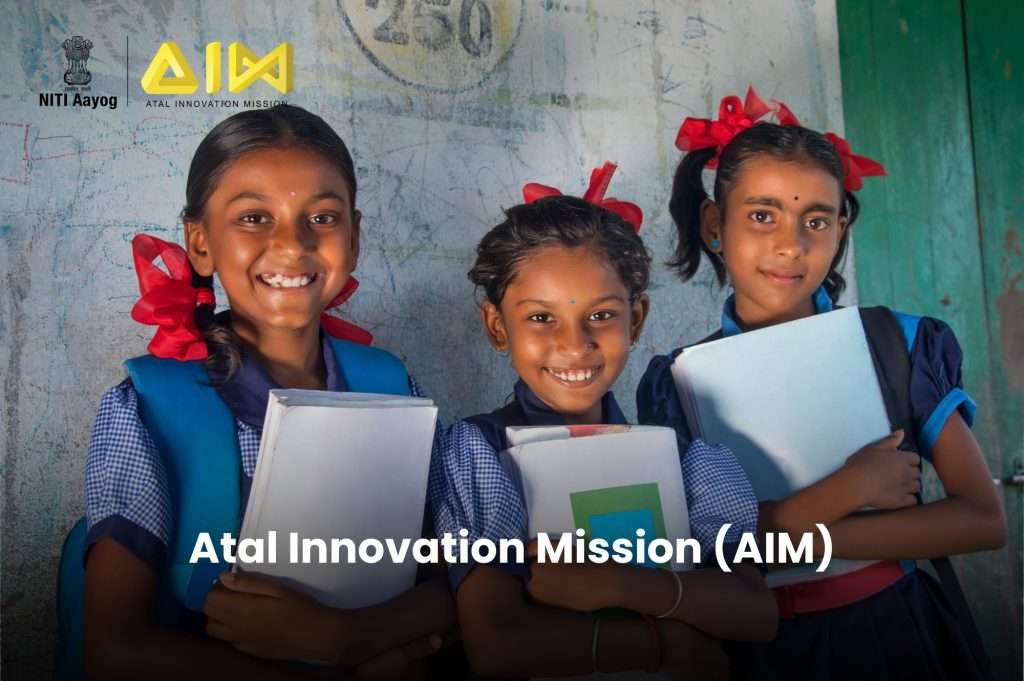
The Atal Innovation Mission (AIM), announced by NITI Aayog, aims to foster an innovative and entrepreneurial culture across all age groups and sectors. The mission serves as a platform for students and businesses to enhance their creativity, problem-solving skills, and products.
Key Components:
- Atal Incubation Centres (AIC):
- Provide world-class infrastructure, mentoring, and finance assistance to businesses.
- Provide networking opportunities for investors, industry specialists, and academic institutions.
2. Atal Tinkering Labs (ATL):
- Established in schools to inspire pupils' curiosity, creativity, and imagination.
- Provide pupils with tools and technologies such as 3D printers, robots, and IoT kits.
Impact
AIM has made a significant contribution to grassroots innovation. Hands-on learning and incubation facilities have helped thousands of students and prospective businesses shape India's future innovators.
Want to Register with Startup India?
Get seamless, fully compliant Startup India registration with FilingPro—your go-to partner for recognition, DPIIT certification, and early-stage compliance.
We handle the process while you work on creating your innovation.
- Partnered by founders and startups from all over India
- 100% online process with transparent, upfront pricing
- Full support—from eligibility check to Startup India recognition
Startup India Innovation Week & Awards
Every January, the Indian government hosts Startup India Innovation Week to highlight entrepreneurship and innovation. The event gives companies the opportunity to present their products, engage with investors, and earn national attention.
Purpose:
- Encourage collaboration between startups, investors, and government.
- Showcase success stories and best practices from the whole startup ecosystem.
- Recognize the achievements of startups that contribute to economic growth and job creation.
Key highlights:
- Startup India Awards: Recognizes exceptional startups in a variety of areas, including fintech, agritech, healthtech, and sustainability.
- Investor Meetings and Panel Discussions: Allow founders to meet with investors and mentors.
- Workshops and exhibitions facilitate information sharing and foster cross-sector learning.
Impact
These programs have helped to boost India's innovation ecosystem by providing thousands of companies with visibility, networking, and learning opportunities.

Additional Supportive Schemes for Entrepreneurs
In addition to the dedicated StartupIndia programs, the Indian government has implemented a number of other financial and developmental schemes targeted at promoting entrepreneurship in a variety of industries. These efforts address the different needs of micro, small, and medium-sized firms (MSMEs) while fostering equitable and sustainable growth.
The following are some of the most effective schemes that complement the StartupIndia mission:

MUDRA Loan Scheme (Pradhan Mantri Mudra Yojana)
The Pradhan Mantri MUDRA Yojana (PMMY), which was launched in 2015, offers financial help to micro and small businesses that often struggle to obtain formal financing. The plan aims to help small firms in the manufacturing, services, and trading sectors to grow their operations.
Key features:
- Loans are available in three categories:
- Shishu offers up to ₹50,000 for new or early-stage firms.
- Kishor offers financing for expanding enterprises ranging from ₹50,001 to ₹5 lakh.
- Tarun offers ₹5 lakh to ₹10 lakh for established firms seeking to expand.
- Loans are available without collateral from public and private sector banks, microfinance organizations (MFIs), and non-bank financial companies (NBFCs).
- The interest rates are competitive, and the payback schedule is flexible.
Impact:
The MUDRA Yojana has enabled millions of small entrepreneurs, primarily in rural and semi-urban areas, to start and grow their businesses. It has been essential in promoting self-employment and grassroots economic growth.

Stand-Up India Scheme
The Stand-Up India Scheme, which was launched in 2016, intends to foster entrepreneurship among women and members of the SC/ST communities, hence encouraging inclusive involvement in the country's economic development.
Key features:
- Offers loans from ₹10 lakh to ₹1 crore for new ventures in manufacturing, services, or trading sectors.
- Each bank branch must help at least one woman and one SC/ST entrepreneur.
- The loan has both term loan and working capital components.
- The initiative also offers assistance in the form of training, skill development, and business operating help.
Impact:
Stand-Up India has opened up new prospects for marginalized groups, encouraging financial independence and diversity in the startup environment. It has enabled thousands of female entrepreneurs and underprivileged communities to establish profitable, self-sustaining businesses.
Credit Linked Capital Subsidy Scheme (CLCSS)
The Ministry of MSME introduced the Credit Linked Capital Subsidy Scheme (CLCSS) to assist small and medium-sized firms in upgrading their technology and machinery. The scheme helps firms improve productivity, efficiency, and competitiveness.
Key features:
- Offers a 15% capital subsidy on institutional financing up to ₹1 crore for technology upgrades.
- Applicable to organizations in the industrial and service industries that use current technologies.
- Encourages the use of energy-efficient and environmentally friendly technology to improve product quality and save costs.
Impact:
CLCSS has helped MSMEs to adopt innovative production techniques and machinery, increasing their competitiveness in both domestic and international markets. The initiative helps small firms sustain and thrive in the long run by permitting upgrading.
Benefits of Registering Under StartupIndia
Getting registered under the StartupIndia initiative has numerous benefits, including simplified business operations, reduced regulatory obligations, and improved access to funding and government possibilities. These advantages make the registration process an essential step for any entrepreneur looking to start or expand a business in India.
- Tax benefits.
Recognized startups can receive income tax breaks for three consecutive fiscal years within the first ten years of formation. Exemptions from capital gains tax and investments over fair market value are also available, allowing startups to reinvest profits in business expansion. - Easy Compliance and Self-Certification
Registered startups can self-certify their compliance with nine important laws, including six labor laws and three environmental laws, for up to five years. This decreases the regulatory load, allowing businesses to focus on innovation and operations rather than administrative processes. - Simplified access to government tenders
Startups registered with StartupIndia can bid on government procurement and tenders without meeting typical eligibility requirements such as past experience or turnover. This leveled the playing field, allowing young enterprises to collaborate with large government agencies and public sector undertakings (PSUs). - Networking and Mentorship Support
StartupIndia's dedicated platforms and initiatives connect entrepreneurs to a national network of incubators, mentors, and investors. Startups can get advice on financing, operations, and growth strategies. Events like Startup India Innovation Week help to increase collaboration between founders and industry experts. - Intellectual Property Support.
Registered startups can save up to 80% on patent application fees and benefit from expedited patent examination, allowing them to protect their unique ideas sooner. The initiative also provides assistance through government-approved facilitators, which reduces legal fees and delays. - Access to funding opportunities.
Startups have access to numerous funding options, including:
- SIDBI manages the Fund of Funds for Startups (FFS).
- Startup India Seed Fund Scheme (SISFS) provides early-stage funding.
- Recognized incubators facilitate the formation of venture capital and angel investor networks.
These funding channels ensure that companies at all stages, from idea creation to expansion, have the financial resources they require to succeed. - Global Exposure and Recognition.
StartupIndia facilitates Indian startups' access to global markets and investors through a variety of national and international partnerships. Programs such as the India-Israel Innovation Bridge and Startup Exchange Missions encourage cross-border collaboration and technology exchange.
How to Apply for Startup India Registration
Startup India's registration procedure is designed to be straightforward, transparent, and fully online. Entrepreneurs can easily apply through the Startup India portal to be recognized by the Department for Promotion of Industry and Internal Trade (DPIIT).
Here's the step-by-step breakdown:
- Step 1: Visit the Startup India Portal.
Visit the official website, www.startupindia.gov.in. Click 'Register' to establish an account using your email address and mobile number.
- Step 2: Create a startup profile.
Once enrolled, go to your dashboard and fill out your startup profile. You will have to provide details such as:
- Name and kind of your business
- Industry type
- Stages of startup (ideation, validation, early traction, or scaling)
- Number of employees
- Key innovations and business models
- Step three: Apply for DPIIT Recognition.
Click 'Get Recognized' in the DPIIT Recognition for Startups section. Fill out the information requested about your firm, directors/partners, and financial status.
- Step 4: Upload the required documents.
You will need to upload the following documents.
- Certificate of Incorporation/Registration (MCA or appropriate body)
- PAN number for the company
- A brief write-up about your business innovation
- Proof of concept (website link, pitch deck, patent, or product demo, if applicable)
- Step 5: Submit your application.
Once the form and documentation have been uploaded, please submit your application for review. The DPIIT normally processes applications within a few business days.
- Step 6: Get the Recognition Certificate.
If approved, you'll obtain a DPIIT Recognition Certificate, which entitles you to tax breaks, funding assistance, and other Startup India incentives.
Common Mistakes To Avoid
- Submitted incomplete or inaccurate documents.
- Failing to exhibit innovation and scalability
- Using a business strategy that does not qualify as a "startup" according to the DPIIT definition
- Not updating corporate information after earning acknowledgment.
Getting recognized by Startup India provides exclusive access to finance, tax breaks, and government tenders, making it an essential step for any aspiring entrepreneur.
Conclusion
India's startup boom is redefining innovation and job creation throughout the country. The Startup India initiative and related government schemes have served as a springboard for thousands of prospective entrepreneurs, giving them with crucial financial assistance, tax breaks, regulatory support, and networking opportunities.
From MUDRA Loans for micro-entrepreneurs to DPIIT recognition perks, the government's emphasis on creating a startup-friendly ecosystem has enabled individuals to transform their ideas into successful businesses.
If you're a budding entrepreneur with a scalable idea, now is the time to register with Startup India and take advantage of the numerous benefits available, including funding support, mentorship, worldwide visibility, and tax breaks.
Register your startup under Startup India today and unlock limitless growth opportunities!: Click Here